Hardware accessory automatic assembly machine manufacturers shift towards intelligent production.
An automatic assembly machine for hardware components is a high-efficiency system that integrates feeding, inspection, assembly, press-fitting, fastening, counting, and output functions. It is primarily used for the automated assembly of hardware parts such as screws, nuts, washers, springs, pins, shafts, and hooks. Its core objective is to achieve precise connections between components through automation, resulting in fully assembled hardware units. Depending on product complexity and assembly requirements, these machines can be configured in various structures—such as rotary (dial-type), linear, or multi-station modular designs—to flexibly meet diverse product specifications and production volume needs.
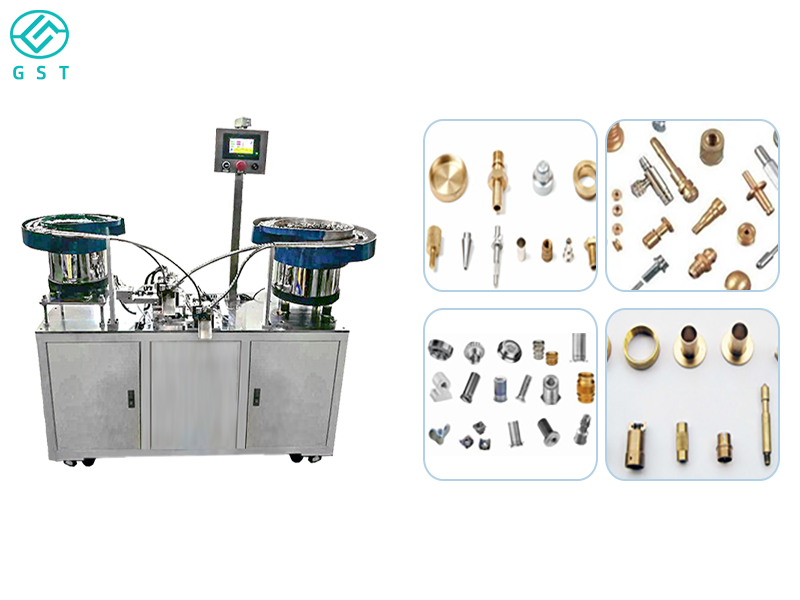
The typical structure of a hardware automatic assembly machine includes:
1. Automatic Feeding System: Uses devices such as vibratory bowls, hoppers, and conveyor belts to orderly separate and transport various components to the assembly station;
2. Positioning and Inspection System: Employs visual recognition and sensor-based positioning technologies to precisely align the location of each component;
3. Assembly Execution Modules: Includes units for press-fitting, fastening (screwing/tightening), insertion, and other mechanisms to perform the actual assembly tasks;
4. Control System: Utilizes PLC programming combined with a Human-Machine Interface (HMI) to enable functions such as one-touch start/stop, parameter adjustment, and operational monitoring;
5. Finished Product Output and Counting System: Automatically conveys assembled products to a designated area and performs counting and sorting.
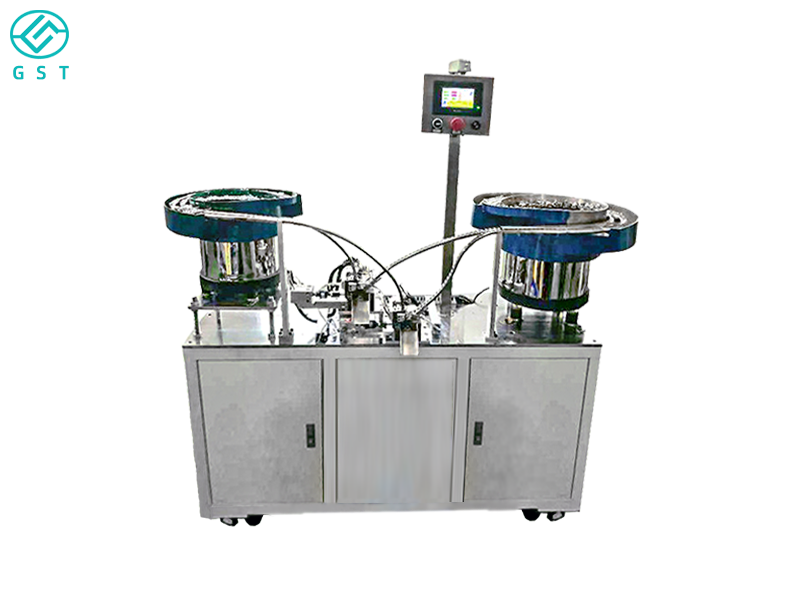
Key Advantages of Automatic Assembly Machines
1. Increased Production Efficiency: Featuring multi-station parallel processing and continuous, stable operation, these machines offer production capacities far exceeding traditional manual assembly methods, making them ideal for high-volume manufacturing.
2. Ensured Product Consistency: Mechanized operations eliminate human error and ensure uniform assembly precision, effectively boosting product pass rates and customer satisfaction.
3. Reduced Labor Costs: A single automatic assembly machine typically requires only one or two operators for monitoring, resulting in significant labor savings compared to traditional manual assembly lines.
4. High Adaptability and Flexibility: A modular design allows for the replacement or addition of functional units based on specific product requirements, making the machines suitable for a wide range of hardware assembly scenarios.
5. Intelligent Inspection and Error Prevention: Equipped with various sensors and vision recognition systems, these machines monitor components in real-time—checking for presence, orientation, and positional accuracy—to guarantee assembly quality.
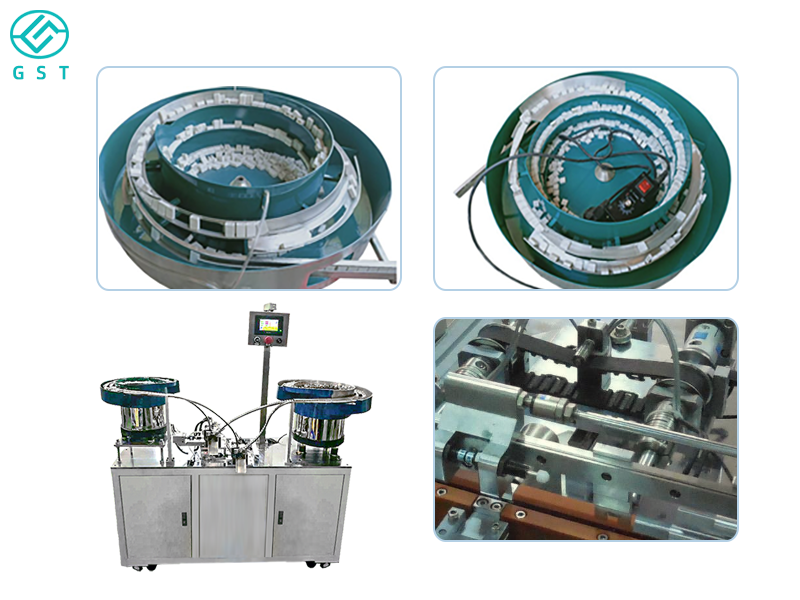
Automatic assembly machines for hardware components represent a crucial step for manufacturing enterprises moving toward intelligent production. Amidst the current industry-wide shift toward high efficiency, high quality, and intelligent manufacturing, these specialized devices are becoming essential tools for hardware manufacturers seeking to upgrade their operations. Whether in sectors such as architectural hardware, furniture fittings, automotive parts, or small appliance components, automatic assembly technology plays an irreplaceable role in significantly boosting efficiency, reducing labor costs, and ensuring consistent product quality.