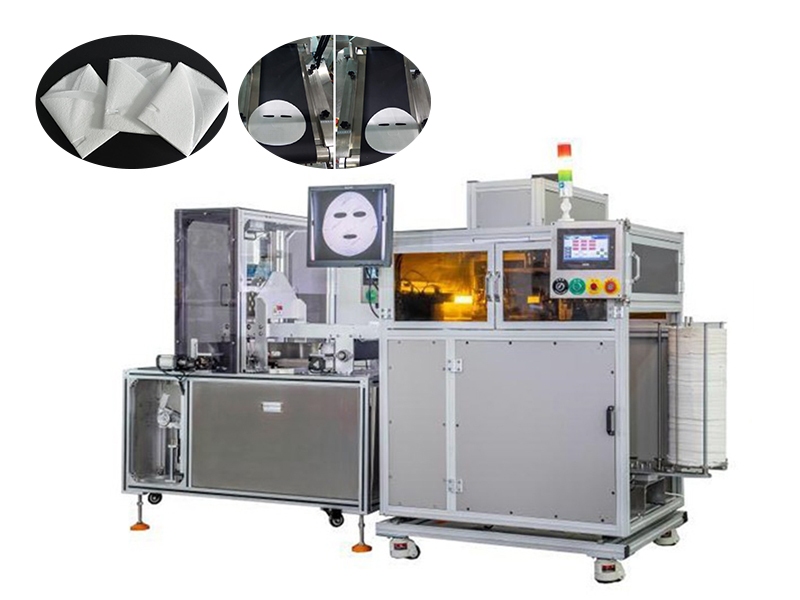
A milestone in the shift of facial mask folding machine enterprises toward intelligent and standardized production.
An automatic facial mask folding machine is specialized automated equipment designed to automatically fold and position facial mask sheets. Its primary function is to rapidly and precisely fold mask sheets—which have already been impregnated with essence—multiple times, ensuring they fit perfectly into their packaging pouches. Traditional mask folding often relies on manual labor, resulting in low efficiency and inconsistent folding patterns, as well as issues like misalignment and contamination; automatic folding machines effectively resolve these pain points.
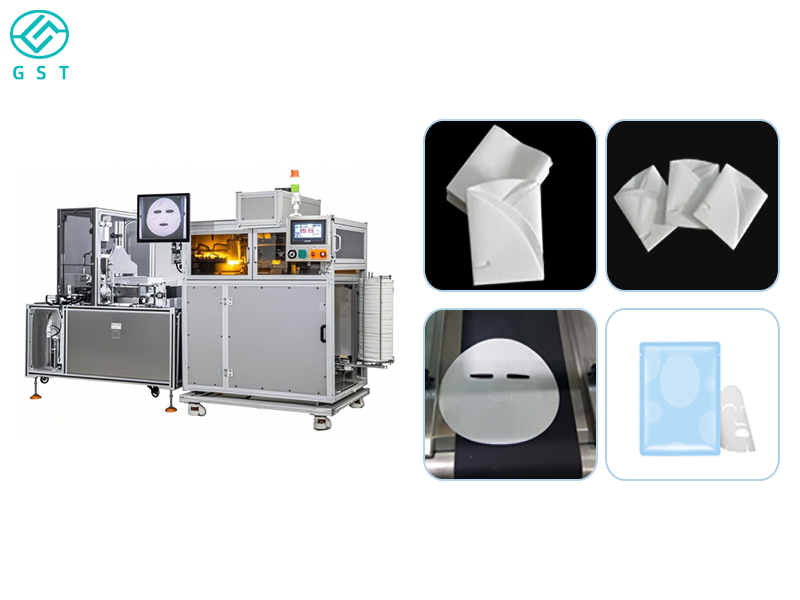
Equipment Structure and Working Principle
The automatic facial mask folding machine generally consists of the following core components:
1. Feeding System: Uniformly transports the pre-cut and impregnated mask sheets to the folding station;
2. Positioning System: Uses photoelectric sensors or visual recognition technology to accurately position the mask sheets, ensuring folding precision;
3. Folding Mechanism: Utilizes multiple robotic arms, pneumatic cylinders, or vacuum grippers to perform single or multiple folds (such as half-folds or Z-folds) according to preset configurations;
4. Output System: Conveys the folded masks via a discharge belt to the subsequent packaging stage;
5. Control System: Features a PLC program and a touchscreen interface to manage automatic operation and parameter adjustments.
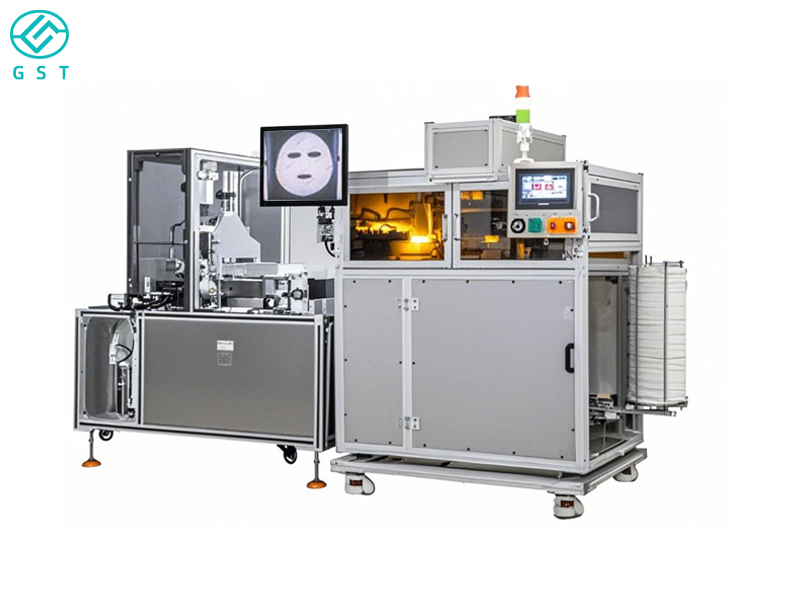
Advantages of Automatic Facial Mask Folding Machines
1. Increased Production Efficiency: A single automatic folding machine can replace multiple manual operators, achieving a daily output of tens of thousands of units and significantly boosting production capacity.
2. Uniform Folding and Enhanced Aesthetics: The machine offers high folding precision, ensuring masks are folded neatly and accurately. This facilitates subsequent bagging processes and improves the overall consumer experience.
3. Reduced Labor Costs: It minimizes the need for manual labor, making it particularly suitable for manufacturing environments facing rising labor costs.
4. Reduced Contamination Risk and Compliance with Clean Production Standards: Fully automated processing effectively eliminates microbial contamination caused by manual handling, meeting the strict hygiene requirements of the cosmetics industry.
5. Support for Various Folding Methods and Mask Shapes: Folding configurations can be adjusted to meet specific product needs—such as accommodating eye masks, neck masks, or crystal masks—offering excellent versatility and scalability.
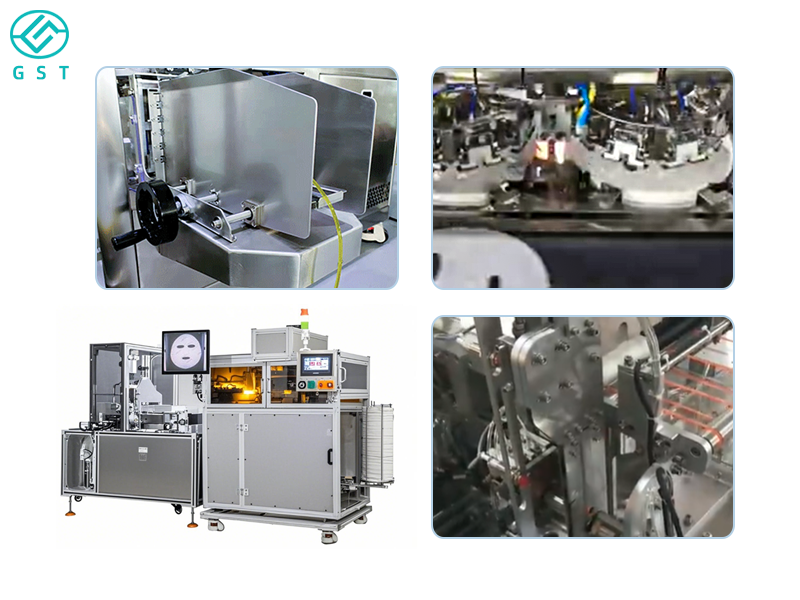
In today’s manufacturing landscape, which demands both high quality and high efficiency, the automatic facial mask folding machine represents not only a technological advancement for the industry but also a key milestone in the transition toward intelligent, standardized production. Its introduction has significantly raised the level of automation in mask manufacturing, providing a solid guarantee for core elements such as product quality, visual consistency, and production efficiency. As the beauty and skincare industry expands rapidly, facial masks have become an essential part of daily routines, driving continuous market demand. With consumers increasingly prioritizing product quality and aesthetic standards, manufacturers face higher expectations regarding production efficiency and consistency. Against this backdrop, the automatic facial mask folding machine has emerged as a critical piece of equipment for enhancing the standardization and automation of facial mask production.