Automatic Assembly Machine for Medical Stool Collection Tubes: Boosting Production Efficiency for Medical Consumables
In modern medical testing, medical stool collection tubes are common sampling containers used primarily for the collection, preservation, and analysis of stool samples. They are widely used in hospitals, health check-up centers, and disease control agencies, playing a crucial role in areas such as infectious disease screening and the diagnosis of intestinal disorders. Because they come into direct contact with biological samples, the manufacturing process for these tubes must strictly adhere to standards regarding sterility, sealing integrity, and precision. The automatic assembly machine for medical stool collection tubes is specialized equipment designed to automate the assembly process; it integrates functions such as feeding, automatic filling, cap screwing, seal testing, automatic labeling, and finished product collection, ensuring efficient, hygienic, and safe production.
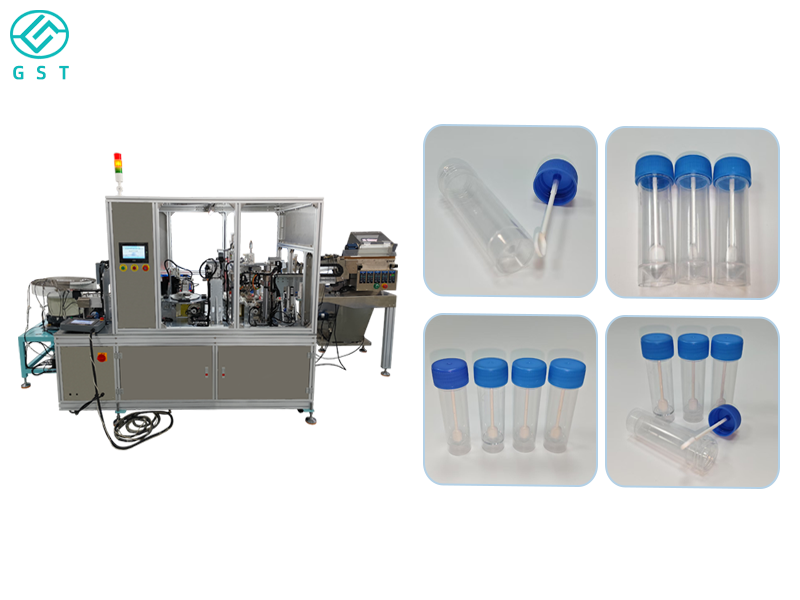
Workflow of the Automatic Assembly Machine for Medical Stool Collection Tubes
1. Automatic Feeding and Orientation: Vibratory bowls or conveyor belts are used to automatically organize the tube components (tube body, sampling spoon, and sealing cap). A vision inspection system ensures correct component orientation and checks for the presence of foreign objects.
2. Automatic Filling (Optional): If the tube requires a preservation solution, the equipment performs precise volumetric filling with an accuracy of ±0.01 ml. Non-contact filling methods are employed to prevent cross-contamination.
3. Sampling Spoon Assembly and Cap Screwing: An automated robotic arm precisely inserts the sampling spoon into the tube body. A servo-driven capping system automatically tightens the sealing cap, ensuring a secure seal to prevent leakage.
4. Quality Inspection and Automatic Sorting: The equipment performs an airtightness test to ensure there are no leaks. A CCD vision inspection system checks for loose caps and verifies that the sampling spoon is correctly installed.
5. Automatic Labeling and Finished Product Collection: The machine automatically applies barcode or QR code labels to enable batch tracking. The assembled tubes are sorted and organized according to standards before proceeding to the next stage of packaging.
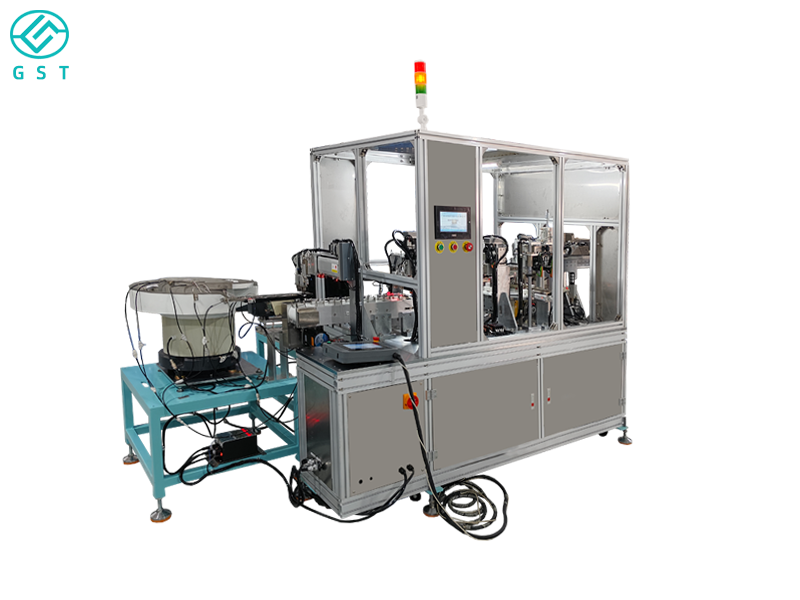
Advantages of the Automatic Assembly Machine for Medical Stool Collection Tubes
1. Increased production efficiency and reduced labor costs: The equipment can assemble 80–150 stool collection tubes per minute, far exceeding manual speeds. Capable of 24-hour continuous operation, it reduces reliance on manual labor and lowers corporate operating costs.
2. Ensured product consistency and high assembly precision: Mechanized operation guarantees high assembly precision and minimal error for every tube, eliminating human error. Dual safeguards—seal integrity testing and visual inspection—ensure stable product quality.
3. Sterile operation throughout, meeting medical GMP standards: Constructed from 304 stainless steel, the equipment complies with requirements for medical cleanrooms. An enclosed production environment prevents secondary contamination and enhances product safety.
4. Compatibility with various specifications to meet market demand: The equipment accommodates stool collection tubes of different diameters and capacities, supporting rapid production mode switching. Automated production lines can be customized for various batch sizes and specifications to meet personalized needs.
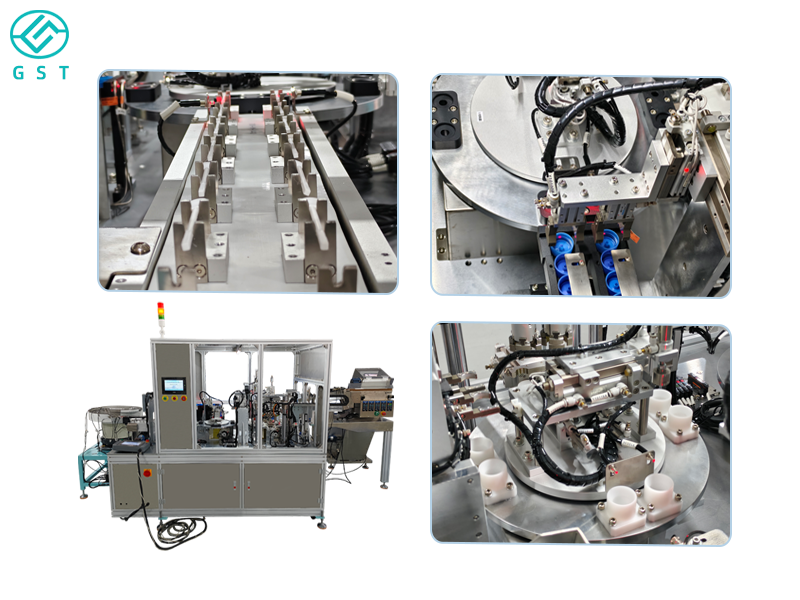
As a key piece of automation equipment in the medical consumables sector, the automatic assembly machine for medical stool collection tubes significantly boosts production efficiency and quality through high-speed output, precise assembly, and rigorous testing. With the medical testing industry's growing demand for equipment offering high precision, cleanliness, and capacity, this machine is a crucial choice for medical device manufacturers seeking to enhance their competitiveness. Looking ahead, the integration of technologies such as artificial intelligence, the Internet of Things (IoT), and big data analytics will drive these machines toward greater intelligence, automation, and standardization, helping the medical industry advance into an era of highly efficient smart manufacturing.