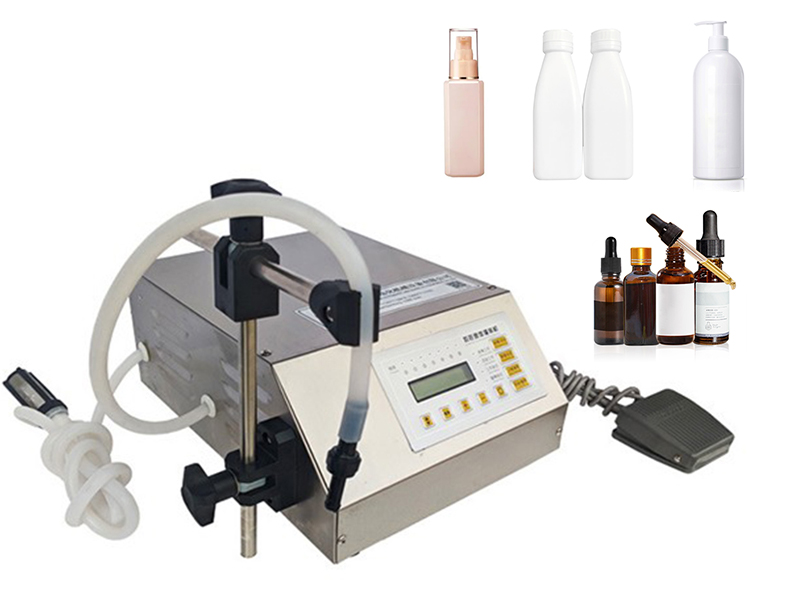
Semi-Automatic Filling Machine: An Efficient and Precise Filling Solution for Small and Medium-Sized Enterprises
In modern industrial production, filling equipment serves as an indispensable asset across various sectors, including food, pharmaceuticals, chemicals, and daily chemical products. Based on their degree of automation, filling machines can be broadly categorized into manual, semi-automatic, and fully automatic types. Among these, semi-automatic filling machines stand out as an ideal choice for small-to-medium enterprises (SMEs)—as well as companies with specific, specialized production requirements—due to their high cost-effectiveness, ease of operation, and strong adaptability.
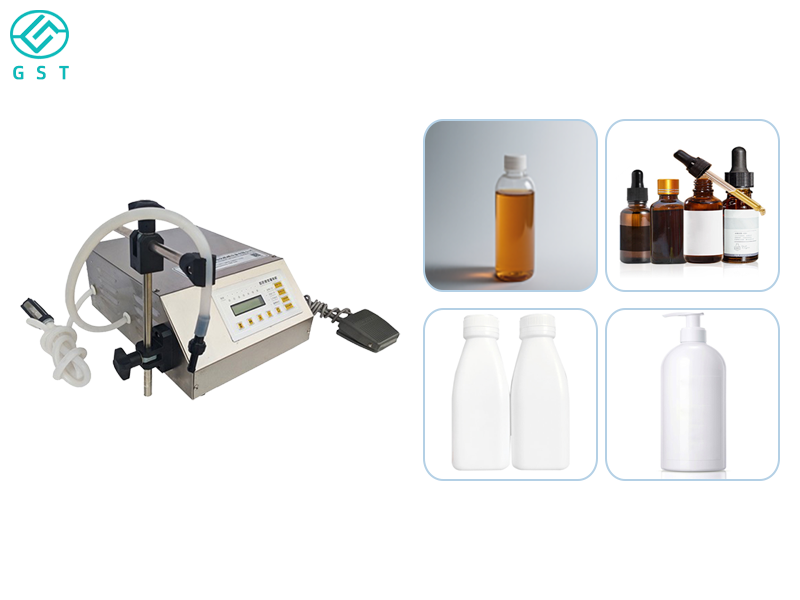
A semi-automatic filling machine typically comprises several key components: a material storage tank, a filling system, a metering device, a control panel, and an operating platform. Its operational principle is outlined as follows:
1. Material Conveyance: Materials are transported to the filling system via a hopper or pipeline; this process can be facilitated through gravity flow, pneumatic conveyance, or pump-driven pressure.
2. Metering Control: The machine employs various metering methods—such as piston-type, screw-type, weighing-based, or flow-meter systems—to ensure that the filling volume for each cycle is precise and consistent.
3. Manual Assistance: The operation requires human intervention; an operator must manually position the bottles or containers and activate the filling button to initiate the filling process for liquids, pastes, or powders.
4. Automated Filling Execution: The equipment automatically dispenses the material according to the pre-set volume. Furthermore, it can be equipped with an anti-drip mechanism to ensure hygienic production standards.
5. Manual Product Retrieval: Once the filling process is complete, a worker manually retrieves the finished product, which can then proceed to subsequent stages such as capping, labeling, and packaging.
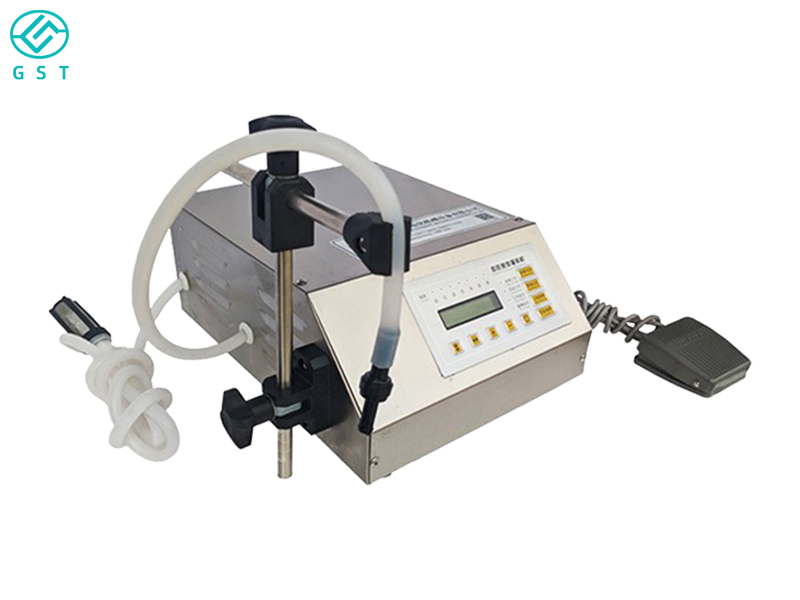
Key Advantages of Semi-Automatic Filling Machines
1. High Cost-Effectiveness: Compared to fully automatic filling machines, semi-automatic models entail lower equipment costs, making them an ideal choice for small and medium-sized enterprises (SMEs) with limited budgets.
2. Simple Operation and Low Maintenance Costs: The equipment features a user-friendly design with an intuitive operating interface, allowing even non-specialized personnel to quickly master its operation after undergoing simple training.
3. Strong Adaptability: Capable of handling a wide variety of materials—including liquids, pastes, powders, and granules—the machine also accommodates bottles or packaging containers of various specifications and materials.
4. High Filling Precision: Utilizing a precise metering system, the machine ensures consistent filling volumes for every product unit, thereby minimizing waste and enhancing overall product quality.
5. Minimal Footprint: With its compact structure and small physical footprint, the equipment is well-suited for environments such as small-scale factories, laboratories, and customized production settings.
6. Versatility for Diverse Production Needs: It serves effectively for small-batch production runs, and can also function as preliminary testing equipment or a backup unit within a fully automated production line.
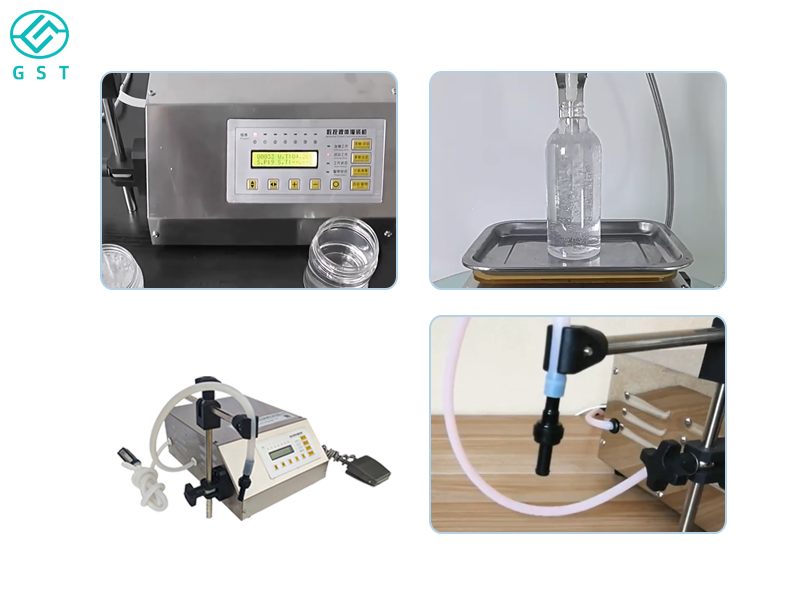
Leveraging their characteristics of high efficiency, precision, and controllable costs, semi-automatic filling machines are widely utilized across numerous industries—including food and beverage, pharmaceuticals, daily chemicals, and general chemical manufacturing—making them an ideal choice for SMEs and businesses with specialized production requirements. As industry trends continue to evolve toward greater intelligence, precision, and eco-friendliness, semi-automatic filling machines are poised to undergo further technological upgrades in the future, offering even higher-quality filling solutions for industrial production. For businesses, selecting the right semi-automatic filling machine not only boosts production efficiency but also ensures consistent product quality, thereby generating greater value for the company's growth and development.