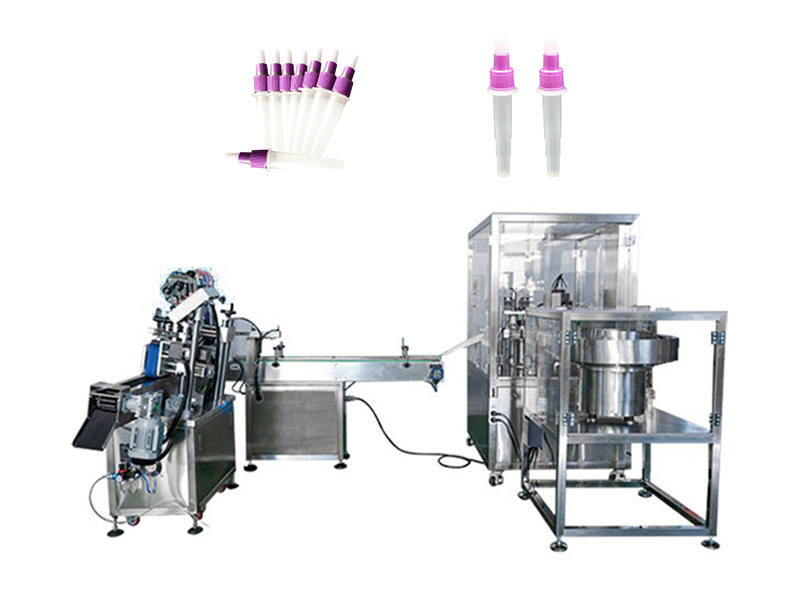
Fully Automated Reagent Production Line: Enhancing Production Efficiency and Quality
With the rapid advancement of modern technology and the growing prosperity of the biopharmaceutical and chemical industries, the demand for reagent production is constantly on the rise. Traditional manual or semi-automated production models are no longer capable of meeting the market's requirements for high efficiency and precision. As a sophisticated form of automated equipment, fully automated reagent production lines play a pivotal role in boosting production efficiency, ensuring product quality, and reducing labor costs. This article explores the operating principles, advantages, application fields, and future development trends of fully automated reagent production lines.
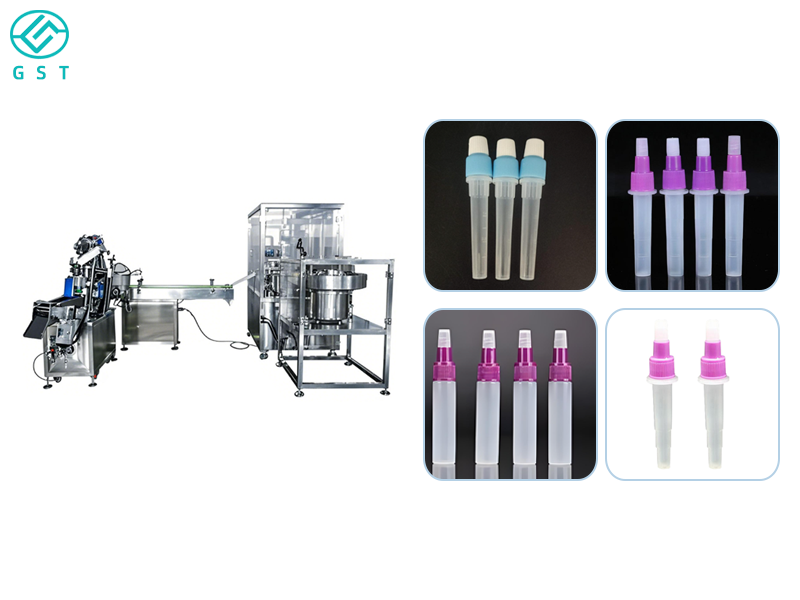
A fully automated reagent production line is a highly automated equipment system that integrates a multitude of functions, including automatic batching, filling, capping, labeling, quality inspection, and packaging. Its core operating principle involves utilizing a PLC (Programmable Logic Controller) or DCS (Distributed Control System) to intelligently control the entire production process, thereby enabling the automated mass production of reagents. Each stage of the production line executes precise operations based on pre-configured process parameters, ensuring the accuracy of reagent formulations and the stability of the production process.
1. Automatic Batching System: The fully automated reagent production line begins by utilizing an automatic batching system to precisely formulate raw materials according to specified ratios. This system is typically equipped with high-precision sensors and controllers capable of monitoring parameters—such as weight and volume—in real time, thereby ensuring that the composition of every reagent batch meets established standards.
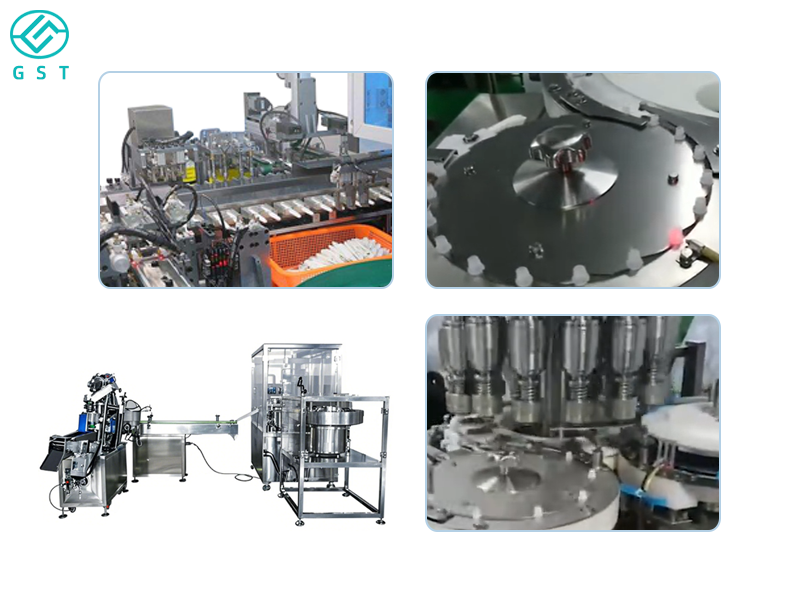
2. Automatic Filling and Capping: The automatic filling unit within the production line performs precise, quantitative filling of reagents, ensuring a consistent volume of reagent in every container. Subsequently, the capping equipment automatically executes operations such as screw-capping or press-capping, guaranteeing the airtightness and integrity of the reagent packaging.
3. Automatic Labeling and Quality Inspection: During the reagent production process, the automatic labeling system prints production dates, batch numbers, and other necessary information as required. Concurrently, the quality inspection system employs image recognition or other technological means to verify factors such as bottle seal integrity and label accuracy, ensuring that every reagent bottle complies with quality standards.
4. Automatic Packaging and Cartoning: Once the reagents have successfully passed quality inspection, automatic packaging equipment organizes and loads the reagent bottles into packaging boxes. Finally, the system performs automatic box sealing and palletizing, preparing the finished products for transfer to warehousing or logistics channels.
Advantages of Fully Automated Reagent Production Lines
1. Enhanced Production Efficiency: A fully automated reagent production line automates the entire manufacturing process; every step—from ingredient mixing to packaging—is executed by mechanical equipment, thereby significantly shortening production cycles. This highly efficient production method enables the rapid, large-scale production of reagents, effectively meeting the demands of a rapidly expanding market.
2. Ensured Product Quality Consistency: Fully automated production equipment allows for precise control over reagent formulation ratios, filling volumes, and sealing quality, thereby eliminating the uncertainties and errors inherent in manual operations. This high-precision manufacturing approach guarantees consistent quality across every batch of reagents, helping to bolster the product's competitiveness in the market.
3. Reduced Labor Costs: Traditional reagent production typically requires extensive manual labor across various stages, including ingredient mixing, filling, sealing, and packaging. In contrast, a fully automated production line significantly reduces reliance on human labor, requiring only a small team of technical personnel to monitor and maintain the equipment, thereby effectively lowering the enterprise's labor costs.
4. Minimized Contamination and Waste: Fully automated reagent production lines employ a closed-loop manufacturing process that effectively prevents external contaminants from entering the production stream while simultaneously minimizing raw material waste. This not only enhances the safety and integrity of the final product but also aligns with the requirements of modern, eco-friendly manufacturing practices.
5. High Flexibility: Modern fully automated reagent production lines feature a high degree of adjustability, allowing for rapid reconfiguration to accommodate the production requirements of different types of reagents. The modular design of the equipment enables the production line to flexibly adapt to reagents of varying specifications and packaging formats, thereby satisfying diverse market demands.
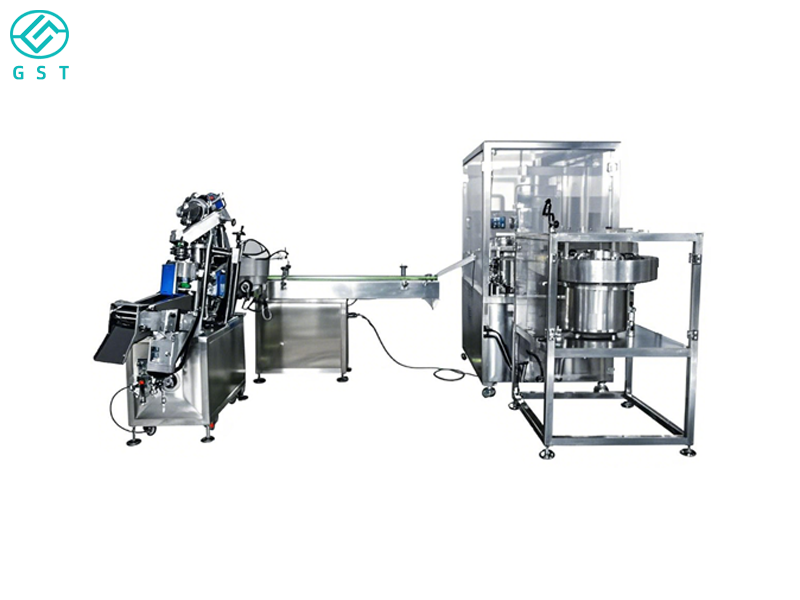
As a critical component of modern industrial manufacturing, fully automated reagent production lines are continuously driving efficient development across sectors such as pharmaceuticals, chemicals, and biotechnology. They not only assist enterprises in boosting production efficiency and reducing manufacturing costs but also ensure the consistency and stability of product quality. Looking ahead, with the deepening integration of intelligent technologies, fully automated reagent production lines will continue to evolve, offering various industries even more intelligent, flexible, and eco-friendly manufacturing solutions.